
The MG Windsor EV has been one of India’s most talked-about electric cars since late 2024, and by 2026 enough real-world data exists to call it a true long-term test case. Buyers care about real range, daily comfort, charging experience, and ownership costs, not just brochure claims, and owner reports and extended reviews give a clear picture of what living with the Windsor actually feels like.
Real-World Range & Efficiency
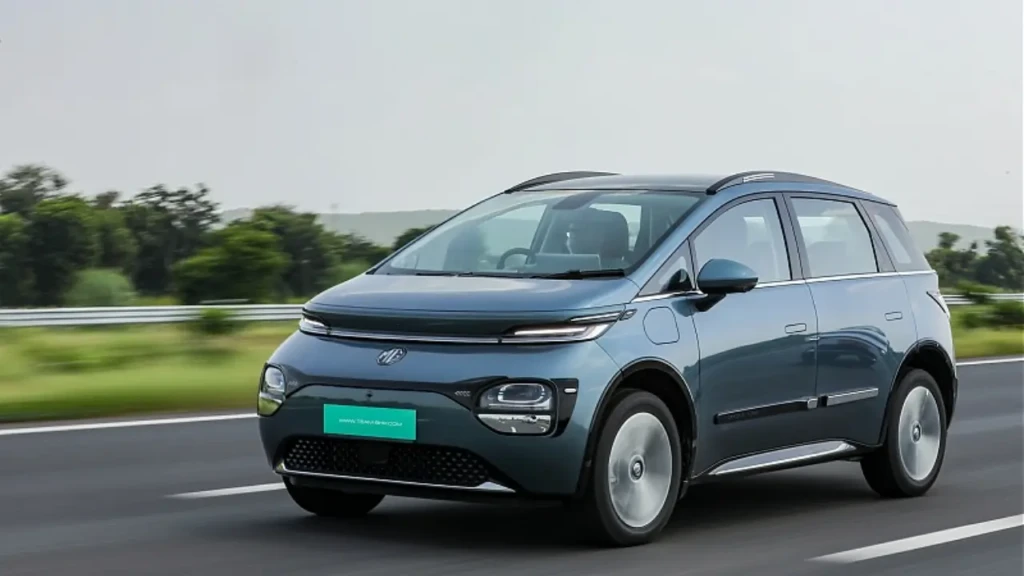
Official figures for the MG Windsor EV sit around the 300–400 km range band depending on variant and test cycle, but long-term users report a more practical 280–350 km usable range in mixed city and highway use.
On smooth city runs with moderate AC, many owners regularly see figures close to the claimed number, while sustained highway driving above 90–100 km/h can reduce the real-world range noticeably.
In one long-term test, an efficiency of around 300 km per full charge was recorded over thousands of kilometres, which is sensible for daily commuting and weekend trips but requires planning for longer inter-city runs.
Daily Driving & Comfort
For everyday use, the Windsor scores well on space and ease of driving.
Owners praise the sofa-like rear seats and generous cabin room, calling it a very family-friendly EV for two adults and two children plus occasional extra passengers.
Daily driving comfort is strong in city conditions, with light controls, good visibility, and a relaxed driving position that suits stop-start traffic.
However, ride quality at low speeds on broken roads is a consistent theme in long-term reports.
The suspension can feel firm, and over sharp potholes or badly patched city roads the car can feel a bit crashy rather than cushioned.
The plush seats are comfortable initially, but some long-term users note that driver ergonomics could be better on very long stints, especially for those who spend hours behind the wheel daily.
City vs Highway Performance
In the city, the Windsor shines as a relaxed, quiet EV with smooth acceleration and no gear shifts.
It is ideal for office commutes, school runs, and local errands, where the instant torque makes overtaking and merging easy and stress-free.
On highways, the car is stable and composed at moderate speeds, but range drops more sharply as speeds climb, and ride firmness becomes more noticeable on uneven stretches.
For buyers who mostly stay within city limits and do occasional highway trips under 250–300 km, the Windsor fits well.
For frequent long-distance highway users, the range behaviour and need for charging planning become more important factors to consider.
Charging Experience
Home charging is the backbone of most Windsor EV ownership stories.
Using a standard AC home charger, owners typically charge overnight and start each day with a near-full battery, which suits daily commutes of 40–80 km very well.
Public DC fast charging is possible, but some owners report inconsistencies and occasional issues with DC charging networks, which can be frustrating on long trips or when quick top-ups are needed.
If you rely heavily on public fast charging, your experience may vary by city and network.
If you can install a home charger and mostly charge overnight, the Windsor’s day-to-day usability improves significantly.
Features & Cabin Quality
The MG Windsor EV is positioned as a feature-rich family EV, with a modern cabin, large touchscreen, connected car tech, and practical storage.
Owner reviews highlight the spacious rear seat, good boot space for an EV, and a generally premium-feeling interior for the segment.
Features such as toddler-friendly rear space, ample legroom, and a comfortable driving position make it a strong pick for families who value room over sporty dynamics.
Cabin quality is generally rated as good, though not class-leading compared to some premium rivals.
Most long-term users are satisfied with the materials, fit and finish, and overall sense of quality for everyday use.
Reliability & Build Quality
Long-term ownership feedback suggests that the Windsor is consistent and dependable rather than exciting.
Owners describe it as a practical, feature-rich EV that prioritises space, ease of use, and everyday comfort over driving thrills.
Build quality is broadly seen as solid, and many users report no major mechanical or electrical issues over several thousand kilometres of use.
Some owners do point out DC charging issues and occasional software or connectivity quirks, but these are not universal and often depend on the specific charging network or vehicle batch.
Running Costs & Ownership Economics
Running cost is one of the Windsor EV’s biggest strengths.
At typical Indian residential electricity rates, the Windsor EV’s cost per kilometre works out to roughly ₹0.94–₹1.30 per km, depending on local tariff and driving style.
By comparison, an equivalent petrol car in this segment can easily cost ₹7–₹8 per km in fuel, making the Windsor dramatically cheaper to run on a per-kilometre basis.
For a typical urban commute of around 50 km per day (1,500 km per month):
- MG Windsor EV electricity cost: roughly ₹1,400–₹2,000 per month depending on battery size and tariff.
- Equivalent petrol car fuel cost: roughly ₹11,000–₹12,000 per month.
That translates to potential monthly savings of ₹9,000–₹10,000 for high-usage city drivers, which can offset a large part of the EMI over time.
MG’s Battery-as-a-Service (BaaS) model also changes the economics, with a monthly battery rental plus charging cost, effectively bundling battery expense into a fixed monthly outgo.
Maintenance costs are also lower than petrol cars, with annual service bills often in the ₹5,000–₹8,000 range for basic checks, tyre rotations, and brake inspections.
MG has offered strong battery warranties, including lifetime warranty for the first owner on certain terms, which adds confidence for long-term buyers.
Pros & Cons
Pros
- Very strong real-world range for city and mixed use, with up to around 300 km per charge in typical conditions.
- Excellent cabin space and sofa-like rear seats, ideal for families.
- Low running cost of roughly ₹0.94–₹1.30 per km, far below petrol equivalents.
- Rich feature list and modern cabin tech for the price.
- Generally reliable and consistent in day-to-day use.
Cons
- Firm ride quality on bad city roads; can feel crashy over potholes.
- DCfast charging experience can be inconsistent depending on network and location.
- Driver seat ergonomics could be better for very long drives.
- Highway range drops more sharply at higher speeds, requiring planning on long trips.
Who Should Buy The MG Windsor EV
The MG Windsor EV makes the most sense for:
- City-based families who need space, comfort, and low running cost.
- High-mileage urban commuters who can charge at home and want to cut fuel bills.
- Buyers who prioritise practicality, features, and ease of use over sporty driving dynamics.
It is less ideal for:
- Buyers who frequently do long, high-speed highway runs without reliable fast-charging access.
- Those who prioritise the softest possible ride over rough urban roads.
Also Read : EV vs Petrol Car Running Cost in India 2026: Which One Actually Saves You More Money?
Final Verdict
After thousands of kilometres and multiple long-term reviews, the MG Windsor EV emerges as a practical, family-friendly electric car with strong real-world range, excellent space, and very low running costs.
Its firm ride on bad roads and occasional DC charging issues are the main drawbacks, but for most urban owners who can charge at home, these are manageable trade-offs.
If your priority is everyday comfort, low monthly bills, and a modern EV experience, the Windsor is one of the most sensible long-term EV choices in India in 2026.
Most long-term users report around 280–350 km per charge in mixed city and highway use, with city-only figures often closer to the higher end.
It is suitable for moderate highway trips, but range drops at high speeds and DC charging can be inconsistent, so planning is needed for very long journeys.
Running cost is roughly ₹0.94–₹1.30 per km depending on electricity tariff and driving conditions, far cheaper than petrol cars.
The most commonly reported issues are firm ride on bad roads and occasional DC fast charging problems, while overall reliability is rated as good.
Yes, it is praised for spacious rear seats, sofa-like comfort, and family-friendly cabin space, making it a strong pick for households with children.
Annual maintenance is typically around ₹5,000–₹8,000, focused on basic checks, tyres, and brakes, which is lower than comparable petrol cars.
BaaS reduces upfront cost and bundles battery expense into a monthly rental, which can suit buyers who want lower initial outlay, while outright purchase lowers long-term per-km cost if you keep the car for many years.
Long-term reviews describe it as consistent, practical, and dependable, with owners generally satisfied over several thousand kilometres of daily driving.
0 Reviews