
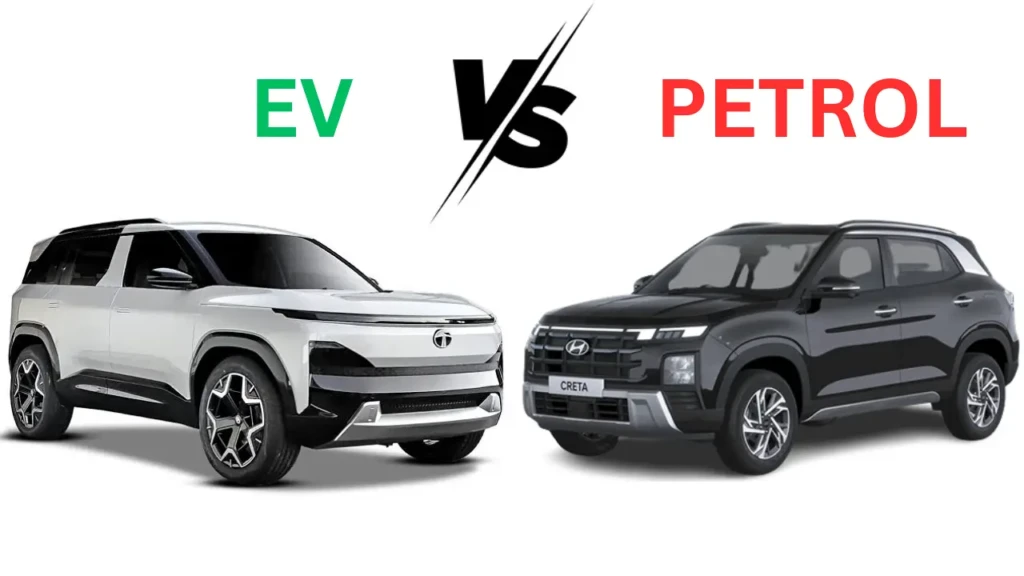
The EV vs petrol debate depends on how and where you drive. EVs are stronger on running cost, maintenance, and smooth city use, while petrol cars still feel easier for long-distance travel and fast refueling.
Cost and ownership
EVs usually cost more upfront, but they are cheaper to run over time because electricity and maintenance costs are lower. Petrol cars are generally cheaper to buy initially, which still makes them attractive for many first-time buyers.
Driving feel
EVs deliver instant torque, so acceleration feels quick and smooth right away. Petrol cars still appeal to drivers who like engine sound, gear shifts, and a more traditional driving experience.
Maintenance and service
EVs have fewer moving parts, so they usually need less routine maintenance and fewer service visits. Petrol cars need more regular upkeep because they have oil changes, filters, spark plugs, and other engine-related parts.
Range and refueling
Petrol cars win on convenience for long trips because refueling is quick and fuel stations are widely available. EVs are improving fast, but charging still takes longer and needs better planning, especially on highway routes.
Environment and future
EVs produce zero tailpipe emissions and are better for reducing local air pollution. Petrol cars still emit CO2 every time they run, which is a major drawback in the long run.
Quick comparison table
| Factor | EV | Petrol |
|---|---|---|
| Upfront price | Usually higher | Usually lower |
| Running cost | Lower | Higher |
| Maintenance | Lower | Higher |
| Refueling/charging | Takes longer | Very quick |
| Driving feel | Smooth and instant | More traditional and engaging |
| Highway convenience | Needs planning | Easier for long trips |
| Emissions | Zero tailpipe emissions | Produces CO2 |
Which one should you choose?
Choose an EV if your driving is mostly in the city, you want lower running cost, and you can charge at home or work. Choose petrol if you drive long distances often, want faster refueling, or do not want to depend on charging infrastructure.
Also Read : Tata Electric Cars Price List in India
Conclusion
There is no single winner for every buyer. EVs are the smarter option for future-focused, low-running-cost ownership, but petrol cars still make sense for people who value convenience, range, and familiar usability.
Yes, EVs are usually cheaper to run because electricity and maintenance costs are lower.
For long highway trips, petrol cars are often more convenient because refueling is quick and easy.
EVs are usually better for city driving because they are smooth, quiet, and efficient in stop-go traffic.
EVs usually offer better long-term savings, especially if you drive a lot and charge mostly at home.
EVs usually win on instant acceleration, while petrol cars are preferred by drivers who enjoy a more classic driving feel.
Petrol cars are still easier for many first-time buyers because they are familiar, cheaper to buy, and simpler to refuel.
If you drive only a little every month, a petrol car may make more sense because the higher upfront EV cost can take longer to recover.
The biggest advantage of an EV is low running cost, along with smooth and quiet driving.
The biggest advantage of a petrol car is convenience, especially quick refueling and easy long-distance travel.
EVs are usually better in heavy traffic because they feel smooth, quiet, and efficient in stop-go conditions.
0 Reviews

Divya Sharma is an automotive writer at CarChaska with over 3 years of experience in the automobile industry. Having previously worked with the sales teams of Maruti Suzuki and Hyundai, she brings practical industry knowledge to her coverage of car launches, reviews, EVs, and automotive trends.